Current value chain
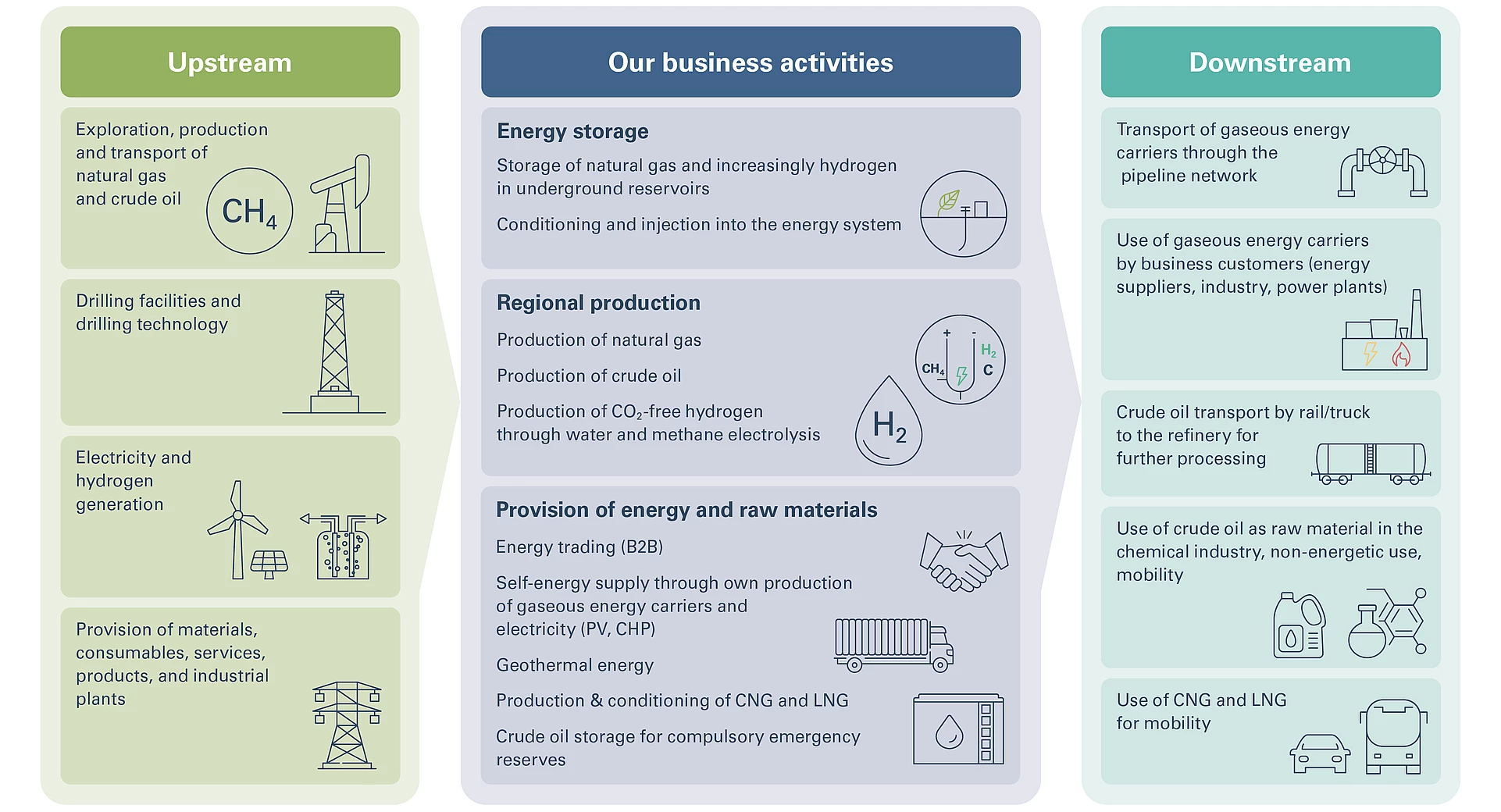
RAG's upstream value chain comprises the production and transport of natural gas, which is temporarily stored in the company's underground storage facilities and remains the property of the storage customers, while RAG exclusively provides the storage service. The provision of energy, materials and consumables, as well as supplies and services such as drilling equipment and drilling technology for both underground and above-ground operations, are particularly relevant for the construction and operation of storage and production facilities. Suppliers from the DACH region or, where possible, regional suppliers are primarily commissioned for this purpose.
The direct value chain includes the production, processing, storage and feed-in to the energy system, as well as the trading and sale of crude oil and gaseous energy sources such as natural gas and hydrogen. RAG produces quantities of crude oil in Austria – with a correspondingly low CO₂-footprint compared to international crude oil imports – which are marketed nationally. The quantities of natural gas produced in Austria reduce the need to import natural gas, albeit only slightly. The connection of RAG's pipeline network to southern Germany also supplies the southern German market and the control areas of Vorarlberg and Tyrol, which can only be reached via Germany. A particular focus is placed on the secure provision of storage capacities, which, as part of the critical infrastructure, contribute significantly to the security of supply for society and industry. As the operator of a crude oil storage facility in Upper Austria, RAG also enables crude oil and mineral oil importers to stockpile their legally required emergency reserves.
Downstream, the value chain includes the transport of crude oil, natural gas and hydrogen by rail and pipeline, as well as the further processing and use of these energy sources by our business customers. RAG also operates public CNG and LNG filling stations for use by end customers for mobility purposes.
Future value chain
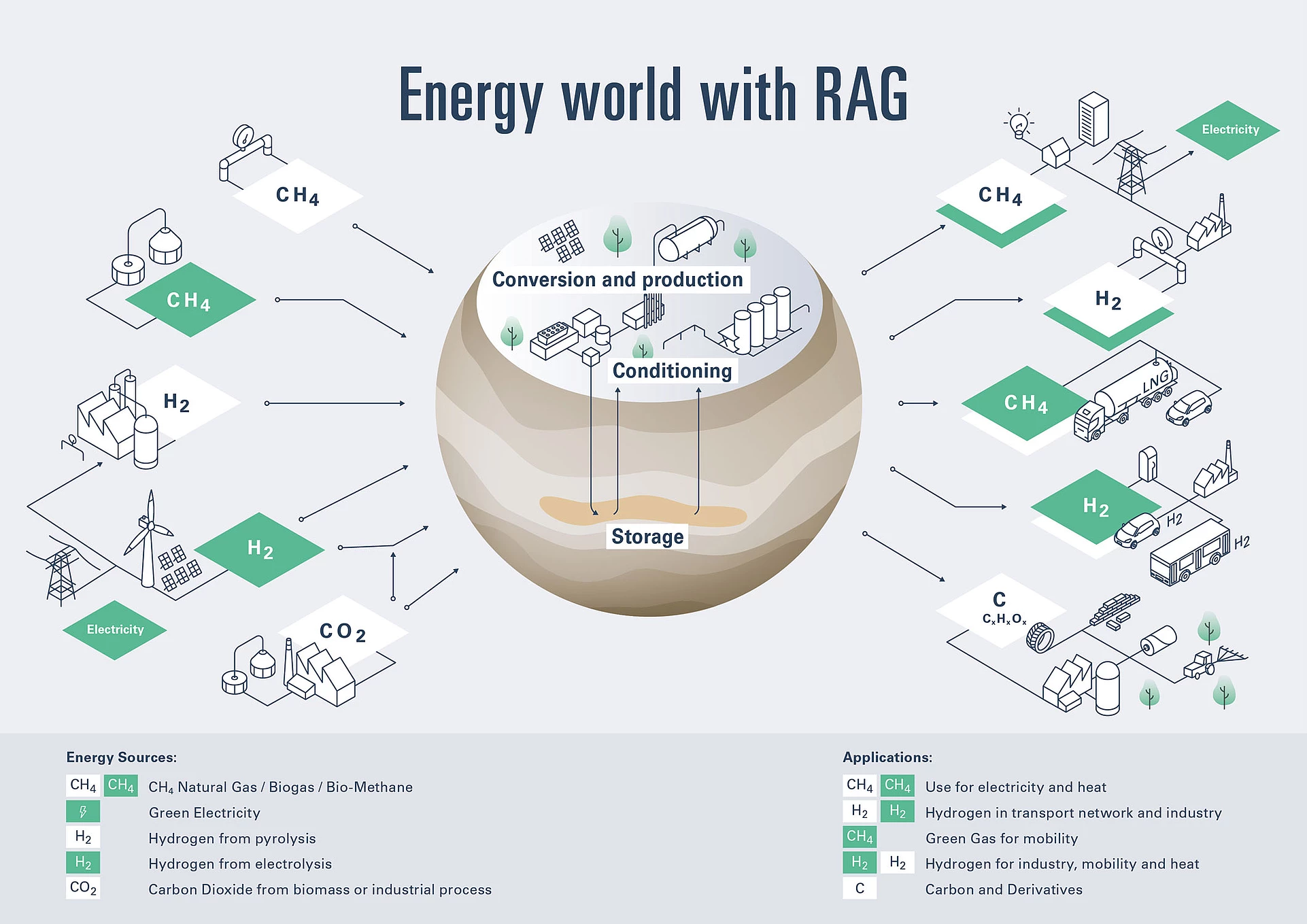
In the future, energy storage may increasingly take the form of green gases such as biomethane and hydrogen. Regardless of the energy source’s origin, storage services will remain an essential part of RAG’s business.
Renewable electricity generated from solar and wind power can be converted into hydrogen through modern electrolysis processes without emitting CO₂. This hydrogen can then either be used as a flexible solution for seasonal storage in our own porous reservoirs or, in combination with CO₂, further processed into synthetic natural gas. In this way, a sustainable carbon cycle can be established, as the resulting green gas is CO₂‑neutral.
In addition, the conversion of methane into hydrogen and the valuable material carbon, which can potentially be used as a raw material for batteries, insulation materials, tires, construction materials, steel, or as a soil conditioner, opens up diverse prospects for industry, construction, and agriculture. Building on successful research and demonstration projects, these innovative technologies can be gradually scaled and commercialized to actively contribute to shaping a sustainable energy future.
-

Shaping the energy future with RAG